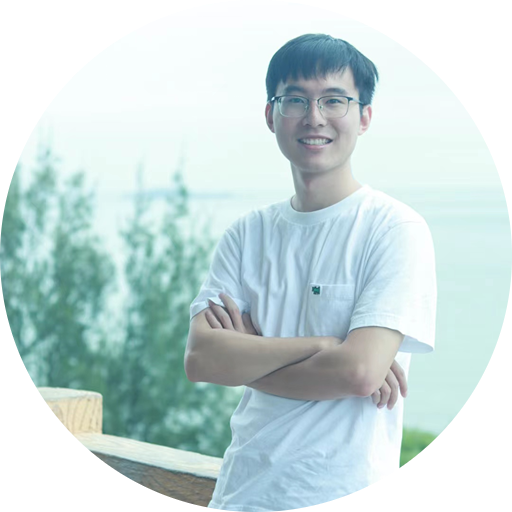
Hi there! I'm Hanrong Zhang, a CS PhD Student advised by Prof. Philip S. Yu (Fellow of ACM, IEEE and AAAS). I'm a Google Student Researcher and was a research intern at Alibaba Group. I received my CS Master degree from Zhejiang University, and was awarded the National Scholarship twice. I have published at top-tier venues including ICLR, ICML, NeurIPS, CVPR, ACL, EMNLP, COLM, etc. 您好!我是张涵容,伊利诺伊大学芝加哥分校计算机科学博士生,导师为 Philip S. Yu 教授 (Fellow of ACM, IEEE and AAAS)。我目前担任 Google 学生研究员,此前曾在阿里巴巴集团担任研究实习生。我于浙江大学获得计算机硕士学位,两次获得国家奖学金。我在 ICLR、ICML、NeurIPS、CVPR、ACL、EMNLP、COLM 等顶级会议发表了多篇论文。
🔥 News🔥 新闻动态
💻 Internships💻 实习经历


📝 Selected Publications and Preprints📝 代表性论文
Hanrong Zhang*, Shicheng Fan*, Henry Peng Zou, Yankai Chen†, Zhenting Wang, Jiayu Zhou, Chengze Li, Wei-Chieh Huang, Yifei Yao, Kening Zheng, Xue Liu, Xiaoxiao Li, Philip S. Yu
Anthropic proposes the concept of skills for LLM agents to tackle multi-step professional tasks that simple tool invocations cannot address. A tool is a single, self-contained function, whereas a skill is a structured bundle of interdependent multi-file artifacts. Currently, skill generation is not only label-intensive due to manual authoring, but also may suffer from human--machine cognitive misalignment, which can lead to degraded agent performance, as evidenced by evaluations on SkillsBench. Therefore, we aim to enable agents to autonomously generate skills. However, existing self-evolving methods designed for tools cannot be directly applied to skills due to their increased complexity. To address these issues, we propose CoEvoSkills, a self-evolving skills framework that enables agents to autonomously construct complex, multi-file skill packages. Specifically, CoEvoSkills couples a Skill Generator that iteratively refines skills with a Surrogate Verifier that co-evolves to provide informative and actionable feedback without access to ground-truth test content. On SkillsBench, CoEvoSkills outperforms five baselines on both Claude Code and Codex, and generalizes strongly to six additional LLMs. The code is publicly available at the project repository.
Anthropic 为 LLM 智能体提出了「技能」的概念,用以处理单纯调用工具无法完成的多步专业任务。工具是单一、自包含的函数,而技能是一组相互依赖、跨多文件的结构化产物。目前技能的生成既依赖人工撰写、标注成本高,又可能出现人机认知错位,从而拖累智能体表现——SkillsBench 上的评测印证了这一点。为此我们希望让智能体自主生成技能。然而技能的复杂度远高于工具,已有的面向工具的自进化方法无法直接迁移。我们提出 CoEvoSkills,一个让智能体自主构建复杂多文件技能包的自进化框架:它将一个迭代优化技能的技能生成器,与一个协同进化的代理验证器耦合起来,后者无需接触真实测试内容即可给出有信息量、可执行的反馈。在 SkillsBench 上,CoEvoSkills 在 Claude Code 与 Codex 上均优于五个基线方法,并在另外六个大模型上展现出很强的泛化能力。
@inproceedings{zhang2026coevoskills,
  title     = {{CoEvoSkills}: Self-Evolving Agent Skills via Co-Evolutionary Verification},
  author    = {Hanrong Zhang and Shicheng Fan and Henry Peng Zou and Yankai Chen and Zhenting Wang and Jiayu Zhou and Chengze Li and Wei-Chieh Huang and Yifei Yao and Kening Zheng and Xue Liu and Xiaoxiao Li and Philip S. Yu},
  booktitle = {Third Conference on Language Modeling},
  year      = {2026},
  url       = {https://openreview.net/forum?id=gQjmJIichQ}
}Hanrong Zhang, Jingyuan Huang, Kai Mei, Yifei Yao, Zhenting Wang, Chenlu Zhan, Hongwei Wang, Yongfeng Zhang
Although LLM-based agents, powered by Large Language Models (LLMs), can use external tools and memory mechanisms to solve complex real-world tasks, they may also introduce critical security vulnerabilities. However, the existing literature does not comprehensively evaluate attacks and defenses against LLM-based agents. To address this, we introduce Agent Security Bench (ASB), a comprehensive framework designed to formalize, benchmark, and evaluate the attacks and defenses of LLM-based agents, including 10 scenarios (e.g., e-commerce, autonomous driving, finance), 10 agents targeting the scenarios, over 400 tools, 27 different types of attack/defense methods, and 7 evaluation metrics. Based on ASB, we benchmark 10 prompt injection attacks, a memory poisoning attack, a novel Plan-of-Thought backdoor attack, 4 mixed attacks, and 11 corresponding defenses across 13 LLM backbones. Our benchmark results reveal critical vulnerabilities in different stages of agent operation, including system prompt, user prompt handling, tool usage, and memory retrieval, with the highest average attack success rate of 84.30\%, but limited effectiveness shown in current defenses, unveiling important works to be done in terms of agent security for the community. We also introduce a new metric to evaluate the agents' capability to balance utility and security. Our code can be found at the project repository.
基于大语言模型的智能体虽然可以借助外部工具与记忆机制解决复杂的现实任务,但也可能引入严重的安全漏洞。然而现有文献尚未系统评估针对此类智能体的攻击与防御。为此我们提出 Agent Security Bench (ASB),一个用于形式化、基准化并评估 LLM 智能体攻防的综合框架,涵盖 10 个场景(如电商、自动驾驶、金融)、10 个对应智能体、400 余个工具、27 种攻击/防御方法以及 7 项评测指标。基于 ASB,我们在 13 个大模型底座上评测了 10 种提示注入攻击、1 种记忆投毒攻击、一种全新的思维计划后门攻击、4 种混合攻击及 11 种对应防御。结果揭示了智能体运行各阶段(系统提示、用户提示处理、工具调用、记忆检索)的关键漏洞,最高平均攻击成功率达 84.30%,而现有防御效果有限,表明智能体安全方向仍有大量工作亟待开展。我们还提出了一项衡量智能体在效用与安全之间取得平衡之能力的新指标。
@inproceedings{zhang2025agent,
  title     = {Agent Security Bench ({ASB}): Formalizing and Benchmarking Attacks and Defenses in {LLM}-based Agents},
  author    = {Hanrong Zhang and Jingyuan Huang and Kai Mei and Yifei Yao and Zhenting Wang and Chenlu Zhan and Hongwei Wang and Yongfeng Zhang},
  booktitle = {The Thirteenth International Conference on Learning Representations},
  year      = {2025},
  url       = {https://openreview.net/forum?id=V4y0CpX4hK}
}Hanrong Zhang*, Yankai Chen*†, Shicheng Fan, Dehai Min, Shaowen Chen, Huanhuan Ma, ..., Hongwei Wang, Dawn Song, Philip S. Yu, Xue Liu
@misc{zhang2026scaling,
  title        = {Scaling {LLM} Agent Learning with Data Synthesis: A Comprehensive Survey},
  author       = {Hanrong Zhang and Yankai Chen and Shicheng Fan and Dehai Min and Shaowen Chen and Huanhuan Ma and Zhaofen Wu and Jie Yang and Bowei He and Jikun Kang and Kening Zheng and Xi Chen and Chunyu Miao and Fulin Lin and Wei-Chieh Huang and Jiayu Zhou and Haolun Wu and Liancheng Fang and Hong Kang and Langzhou He and Henry Peng Zou and Chengze Li and Jialong Wu and Haiwen Hong and Zhaorun Chen and Hanjun Luo and Linghe Kong and Hongwei Wang and Dawn Song and Philip S. Yu and Xue Liu},
  year         = {2026},
  howpublished = {Preprint},
  url          = {https://www.researchgate.net/publication/406488336_Scaling_LLM_Agent_Learning_with_Data_Synthesis_A_Comprehensive_Survey}
}Zhaofen Wu*, Hanrong Zhang*†, Fulin Lin, Wujiang Xu, Xinran Xu, Yankai Chen, Henry Peng Zou, Shaowen Chen, Weizhi Zhang, Xue Liu, Philip S. Yu, Hongwei Wang†
To sustain coherent long-term interactions, Large Language Model (LLM) agents must navigate the tension between acquiring new information and retaining prior knowledge. Current unified stream-based memory systems facilitate context updates but remain vulnerable to interference from transient noise. Conversely, discrete structured memory architectures provide robust knowledge retention but often struggle to adapt to evolving narratives. To address this, we propose GAM, a hierarchical Graph-based Agentic Memory framework that explicitly decouples memory encoding from consolidation to effectively resolve the conflict between rapid context perception and stable knowledge retention. By isolating ongoing dialogue in an event progression graph and integrating it into a topic associative network only upon semantic shifts, our approach minimizes interference while preserving long-term consistency. Additionally, we introduce a graph-guided, multi-factor retrieval strategy to enhance context precision. Experiments on LoCoMo and LongDialQA indicate that our method consistently outperforms state-of-the-art baselines in both reasoning accuracy and efficiency.
要维持连贯的长期交互,大语言模型智能体必须在获取新信息与保留既有知识之间取得平衡。当前基于统一信息流的记忆系统便于上下文更新,却易受瞬时噪声干扰;而离散的结构化记忆架构虽能稳健保留知识,却难以适应不断演进的叙事。为此我们提出 GAM——一个分层的图结构智能体记忆框架,将记忆的编码与固化显式解耦,从而化解快速情境感知与稳定知识留存之间的冲突。该方法把进行中的对话隔离在事件演进图中,仅在语义发生转变时才并入主题关联网络,在保持长期一致性的同时将干扰降至最低。我们还引入了一种图引导的多因子检索策略以提升上下文精度。在 LoCoMo 与 LongDialQA 上的实验表明,本方法在推理准确率与效率上均稳定优于当前最佳基线。
@inproceedings{wu2026gam,
  title     = {{GAM}: Hierarchical Graph-based Agentic Memory for {LLM} Agents},
  author    = {Wu, Zhaofen and Zhang, Hanrong and Lin, Fulin and Xu, Wujiang and Xu, Xinran and Chen, Yankai and Zou, Henry Peng and Chen, Shaowen and Zhang, Weizhi and Liu, Xue and Yu, Philip S. and Wang, Hongwei},
  booktitle = {Proceedings of the 64th Annual Meeting of the Association for Computational Linguistics (Volume 1: Long Papers)},
  pages     = {34647--34664},
  year      = {2026},
  publisher = {Association for Computational Linguistics},
  doi       = {10.18653/v1/2026.acl-long.1600}
}Zhiling Yan, Dingjie Song, Hanrong Zhang, Wei Liang, Yuxuan Zhang, Yutong Dai, Lifang He, Philip S. Yu, Ran Xu, Xiang Li, Lichao Sun
Self-evolving agents requires adaptation after deployment, but existing approaches assume a usable learning loop, such as curated skills, successful trajectories, or verifier signals. Real open-world deployments may provide none of these, offering only a task prompt. In this work, we study open-world self-evolution, where an agent must build both its skills and its own verification signals from scratch, using open-world resources but no target-task supervision. We propose OpenSkill, a framework that bootstraps this loop: it acquires grounded knowledge and verification anchors from documentation, repositories, and the web, synthesizes them into transferable skills, and refines those skills against self-built virtual tasks grounded in the anchors rather than in target answers. The open world thus supplies both the knowledge to be learned and a supervision-independent practice environment, with target-task supervision reserved for final evaluation. Across three benchmarks and two target agents, OpenSkill attains the best automated pass rate while satisfying the no-supervision constraint. Analysis shows its skills transfer across models without model-specific adaptation, and its self-built verifier aligns with ground-truth outcomes despite never accessing them.
自进化智能体需要在部署之后持续适应,但已有方法都预设了一个可用的学习闭环——精选的技能、成功的轨迹或验证器信号。真实的开放世界部署可能一样都不提供,有的只是一条任务提示。本文研究开放世界自进化:智能体必须在没有目标任务监督的前提下,仅借助开放世界资源,从零构建自身的技能与验证信号。我们提出 OpenSkill 来自举这一闭环:它从文档、代码仓库和网络中获取有据可依的知识与验证锚点,将其合成为可迁移的技能,再针对以锚点(而非目标答案)为依据的自建虚拟任务打磨这些技能。开放世界由此同时提供了待学习的知识和一个不依赖监督的练习环境,目标任务的监督信号仅保留用于最终评测。在三个基准、两个目标智能体上,OpenSkill 在满足无监督约束的同时取得了最高的自动通过率。分析表明其技能无需针对特定模型适配即可跨模型迁移,且其自建验证器在从未接触真值的情况下仍与真实结果保持一致。
@inproceedings{yan2026openskill,
  title     = {{OpenSkill}: Open-World Self-Evolution for {LLM} Agents},
  author    = {Zhiling Yan and Dingjie Song and Hanrong Zhang and Wei Liang and Yuxuan Zhang and Yutong Dai and Lifang He and Philip S. Yu and Ran Xu and Xiang Li and Lichao Sun},
  booktitle = {The 2026 Conference on Empirical Methods in Natural Language Processing},
  year      = {2026},
  url       = {https://openreview.net/forum?id=Fm3kjvxZIO}
}Dingjie Song, Hanrong Zhang, Dawei Liu, Yixin Liu, Zongxia Li, Zhengqing Yuan, Siqi Zhang, Henry Peng Zou, Zhiling Yan, Yuxuan Zhang, Yanfang Ye, Philip S. Yu, Lichao Sun
Command-line coding agents (e.g., Claude Code, Gemini CLI) can already read and write files and sustain long sessions, yet end-to-end research still fragments across chat tools, IDEs, terminals, and writing environments, and the decisions that make it auditable are rarely preserved. We present Dr. Claw, an open-source workspace that wraps existing coding-agent executors in a controllable and auditable human-in-the-loop workflow rather than introducing another autonomous agent. Persistent state objects, a reusable skill library, and multi-executor coordination link human decisions to AI execution, turning planning, execution, and writing into one traceable, recoverable loop. We demonstrate Dr. Claw through an interactive three-view scenario and a failure-recovery walkthrough, and evaluate it against a bare command-line agent sharing the same backend executor, so the comparison contrasts the whole orchestration layer (task graph, state objects, and skill library) with the agent it wraps. Holding the executor fixed, Dr. Claw scores higher on research completeness while persisting an auditable, recoverable process trail. Demo access: repository the project repository, released under AGPL-3.0 with GPL-3.0 upstream components.
命令行编码智能体(如 Claude Code、Gemini CLI)已经能够读写文件并维持长会话,但端到端的科研过程仍然割裂在聊天工具、IDE、终端和写作环境之间,而那些让研究可被审计的关键决策往往没有被保留下来。我们提出 Dr. Claw,一个开源工作空间:它不是再造一个自主智能体,而是把已有的编码智能体执行器包裹进一套可控、可审计、人在回路的工作流中。持久化状态对象、可复用的技能库以及多执行器协同,把人的决策与 AI 的执行连接起来,使规划、执行与写作合并为一个可追溯、可恢复的闭环。我们通过一个交互式三视图场景和一次故障恢复演练来展示 Dr. Claw,并将其与共享同一后端执行器的裸命令行智能体作对比——因此这一比较对照的是整个编排层(任务图、状态对象与技能库)与被它包裹的智能体本身。在执行器固定的前提下,Dr. Claw 在研究完整性上得分更高,同时留下了可审计、可恢复的过程轨迹。
@misc{song2026drclaw,
  title         = {Dr. Claw: An {AI} Scientist Workspace for Vibe Research},
  author        = {Dingjie Song and Hanrong Zhang and Dawei Liu and Yixin Liu and Zongxia Li and Zhengqing Yuan and Siqi Zhang and Henry Peng Zou and Zhiling Yan and Yuxuan Zhang and Yanfang Ye and Philip S. Yu and Lichao Sun},
  year          = {2026},
  eprint        = {2609.00365},
  archivePrefix = {arXiv},
  primaryClass  = {cs.AI},
  url           = {https://arxiv.org/abs/2609.00365}
}Core contributor
Research in artificial intelligence is shifting from model innovations and benchmark scores towards problem definition and rigorous real-world evaluation. As the field enters the "second half," the central challenge becomes real utility in long-horizon, dynamic, and user-dependent settings such as agentic coding, deep research, and computer use, where LLM-based agents face context explosion beyond fixed context windows and must continuously accumulate, manage, and selectively reuse information across extended interactions. Memory, with hundreds of papers released in 2025, therefore emerges as the critical solution to fill this utility gap. Beyond passive storage, memory is increasingly the substrate through which agents self-evolve: short-term memory gates which experiences are perceived and abstracted during execution, while long-term memory consolidates them into reusable knowledge and skills, forming the loop through which agents improve from their own experience. In this survey, we provide a unified view of foundation agent memory along three dimensions: memory substrate (internal parametric state and external retrieval-augmented stores), cognitive mechanism (sensory, working, episodic, semantic, and procedural), and memory subject (user-centric personalization and agent-centric experience). We then analyze how memory is operated under single- and multi-agent topologies and highlight learning policies over memory operations, showing how memory management itself is becoming a trainable capability spanning reinforcement-learned context curation, experience consolidation at decision time, and the emerging ecosystem of portable, shareable agent skills. Finally, we review evaluation benchmarks and metrics for memory utility, and outline open challenges and future directions.
人工智能研究的重心正从模型创新与刷榜,转向问题定义与严格的真实场景评测。随着该领域进入「下半场」,核心挑战变成了在长程、动态、因人而异的场景(如智能体编程、深度研究、计算机操作)中实现真正的实用价值——在这些场景里,LLM 智能体面临超出固定上下文窗口的上下文爆炸,必须在长时间交互中持续积累、管理并有选择地复用信息。记忆因而成为填补这一实用性缺口的关键,2025 年已有数百篇相关论文问世。记忆不止是被动存储,更日益成为智能体自我进化的基底:短期记忆决定执行过程中哪些经验被感知与抽象,长期记忆则把它们固化为可复用的知识与技能,由此形成智能体从自身经验中改进的闭环。本综述从三个维度统一审视基础智能体记忆:记忆载体(内部参数化状态与外部检索增强存储)、认知机制(感觉、工作、情景、语义、程序性记忆)以及记忆主体(以用户为中心的个性化与以智能体为中心的经验)。我们进而分析记忆在单智能体与多智能体拓扑下的运作方式,并着重讨论记忆操作之上的学习策略,展示记忆管理本身如何正在成为一种可训练的能力——涵盖强化学习驱动的上下文编排、决策时的经验固化,以及正在兴起的可移植、可共享智能体技能生态。最后我们梳理了衡量记忆效用的评测基准与指标,并展望了开放挑战与未来方向。
@article{huang2026survey,
  title   = {A Survey of Agent Memory in the Second Half: Towards Self-Evolving and Long-Horizon Agents},
  author  = {Wei-Chieh Huang and Weizhi Zhang and Yueqing Liang and Yuanchen Bei and Yankai Chen and Tao Feng and Xinyu Pan and Zhen Tan and Yu Wang and Tianxin Wei and Shanglin Wu and Ruiyao Xu and Liangwei Yang and Rui Yang and Wooseong Yang and Chin-Yuan Yeh and Hanrong Zhang and Haozhen Zhang and Siqi Zhu and Henry Peng Zou and Wanjia Zhao and Song Wang and Wujiang Xu and Zixuan Ke and Zheng Hui and Dawei Li and Yaozu Wu and Langzhou He and Chen Wang and Xiongxiao Xu and Baixiang Huang and Juntao Tan and Shelby Heinecke and Huan Wang and Caiming Xiong and Ahmed Metwally and Jun Yan and Chen-Yu Lee and Hanqing Zeng and Yinglong Xia and Xiaokai Wei and Ali Payani and Yu Wang and Haitong Ma and Wenya Wang and Chenguang Wang and Yu Zhang and Xin Eric Wang and Yongfeng Zhang and Jiaxuan You and Hanghang Tong and Xiao Luo and Xue Liu and Yizhou Sun and Wei Wang and Julian J. McAuley and James Zou and Jiawei Han and Philip S. Yu and Kai Shu},
  journal = {Transactions on Machine Learning Research},
  issn    = {2835-8856},
  year    = {2026},
  url     = {https://openreview.net/forum?id=XycbogUAeJ},
  note    = {Survey Certification}
}Hanrong Zhang*, Zhenting Wang*, Boheng Li, Fulin Lin, Tingxu Han, Mingyu Jin, Chenlu Zhan, Mengnan Du, Hongwei Wang†, Shiqing Ma
Self-supervised learning (SSL) models are vulnerable to backdoor attacks. Existing backdoor attacks that are effective in SSL often involve noticeable triggers, like colored patches or visible noise, which are vulnerable to human inspection. This paper proposes an imperceptible and effective backdoor attack against self-supervised models. We first find that existing imperceptible triggers designed for supervised learning are less effective in compromising self-supervised models. We then identify this ineffectiveness is attributed to the overlap in distributions between the backdoor and augmented samples used in SSL. Building on this insight, we design an attack using optimized triggers disentangled with the augmented transformation in the SSL, while remaining imperceptible to human vision. Experiments on five datasets and six SSL algorithms demonstrate our attack is highly effective and stealthy. It also has strong resistance to existing backdoor defenses. Our code can be found at the project repository.
自监督学习模型易受后门攻击。现有在自监督场景下有效的后门攻击往往依赖明显的触发器,如彩色色块或可见噪声,容易被人工检查发现。本文提出一种针对自监督模型的不可感知且高效的后门攻击。我们首先发现,为监督学习设计的现有隐蔽触发器在攻陷自监督模型时效果较差;进而识别出原因在于后门样本与自监督学习所用增强样本之间的分布重叠。基于这一洞察,我们设计了一种攻击方法,其优化后的触发器与自监督学习中的增强变换相解耦,同时对人眼保持不可感知。在五个数据集、六种自监督算法上的实验表明,该攻击兼具高效与隐蔽,并对现有后门防御具有很强的抵抗力。
@inproceedings{zhang2025invisible,
  title     = {Invisible Backdoor Attack against Self-supervised Learning},
  author    = {Zhang, Hanrong and Wang, Zhenting and Li, Boheng and Lin, Fulin and Han, Tingxu and Jin, Mingyu and Zhan, Chenlu and Du, Mengnan and Wang, Hongwei and Ma, Shiqing},
  booktitle = {Proceedings of the IEEE/CVF Conference on Computer Vision and Pattern Recognition (CVPR)},
  month     = {June},
  year      = {2025},
  pages     = {25790--25801}
}Hanrong Zhang, Yifei Yao, Zixuan Wang, Jiayuan Su, Mengxuan Li, Peng Peng, Hongwei Wang
Class-incremental fault diagnosis requires a model to adapt to new fault classes while retaining previous knowledge. However, limited research exists for imbalanced and long-tailed data. Extracting discriminative features from few-shot fault data is challenging, and adding new fault classes often demands costly model retraining. Moreover, incremental training of existing methods risks catastrophic forgetting, and severe class imbalance can bias the model's decisions toward normal classes. To tackle these issues, we introduce a Supervised Contrastive knowledge distiLlation for class Incremental Fault Diagnosis (SCLIFD) framework proposing supervised contrastive knowledge distillation for improved representation learning capability and less forgetting, a novel prioritized exemplar selection method for sample replay to alleviate catastrophic forgetting, and the Random Forest Classifier to address the class imbalance. Extensive experimentation on simulated and real-world industrial datasets across various imbalance ratios demonstrates the superiority of SCLIFD over existing approaches. Our code can be found at the project repository.
类增量故障诊断要求模型在适应新故障类别的同时保留既有知识,但针对不平衡与长尾数据的研究仍然有限。从少样本故障数据中提取判别性特征本身就很困难,而新增故障类别又往往需要代价高昂的模型重训练。此外,现有方法的增量训练存在灾难性遗忘风险,严重的类别不平衡还会使模型决策偏向正常类。为解决这些问题,我们提出 SCLIFD 框架(面向类增量故障诊断的有监督对比知识蒸馏):以有监督对比知识蒸馏提升表征学习能力并减少遗忘,提出一种新的优先级样本选择方法用于回放以缓解灾难性遗忘,并采用随机森林分类器应对类别不平衡。在仿真与真实工业数据集、多种不平衡比例下的大量实验验证了 SCLIFD 相较现有方法的优越性。
@article{zhang2025class,
  title     = {Class Incremental Fault Diagnosis Under Limited Fault Data via Supervised Contrastive Knowledge Distillation},
  author    = {Zhang, Hanrong and Yao, Yifei and Wang, Zixuan and Su, Jiayuan and Li, Mengxuan and Peng, Peng and Wang, Hongwei},
  journal   = {IEEE Transactions on Industrial Informatics},
  volume    = {21},
  number    = {6},
  pages     = {4344--4354},
  year      = {2025},
  publisher = {Institute of Electrical and Electronics Engineers (IEEE)},
  doi       = {10.1109/tii.2025.3534407}
}Hanrong Zhang, Xinyue Wang, Jiabao Pan, Hongwei Wang
Knowledge graph (KG) technology is extensively utilized in many areas, and many companies offer applications based on KG. Nonetheless, most KG platforms necessitate expertise and tremendous time and effort from users to construct KG records manually, which poses great difficulties for ordinary people. Additionally, audio data is abundant and holds valuable information, but it is challenging to transform it into a KG. What's more, the platforms usually do not leverage the full potential of the KGs constructed by users. In this paper, we propose an intelligent and user-friendly platform for Semi-automated KG Construction and Application (SAKA) to address the aforementioned problems. Primarily, users can semi-automatically construct KGs from structured data of numerous areas by interacting with the platform, based on which multi-versions of KG can be stored, viewed, managed, and updated. Moreover, we propose an Audio-based KG Information Extraction (AGIE) method to establish KGs from audio data. Lastly, the platform creates a semantic parsing-based knowledge base question answering (KBQA) system based on the user-created KGs. We prove the feasibility of the semi-automatic KG construction method on the SAKA platform.
知识图谱技术在诸多领域被广泛使用,不少公司也提供基于知识图谱的应用。然而多数知识图谱平台要求用户具备专业知识,并投入大量时间精力手工构建图谱记录,这对普通用户构成了很高的门槛。此外,音频数据量大且蕴含有价值的信息,却难以转化为知识图谱。再者,这些平台通常也没有充分利用用户所构建图谱的潜力。本文提出一个智能、易用的半自动知识图谱构建与应用平台 SAKA 来解决上述问题。首先,用户可以通过与平台交互,从多个领域的结构化数据半自动地构建知识图谱,并在此基础上存储、查看、管理和更新多个版本的图谱。其次,我们提出一种基于音频的知识图谱信息抽取方法 AGIE,用以从音频数据建立知识图谱。最后,平台基于用户创建的图谱搭建了一套基于语义解析的知识库问答系统。我们在 SAKA 平台上验证了该半自动构建方法的可行性。
@article{zhang2023saka,
  title     = {{SAKA}: an intelligent platform for semi-automated knowledge graph construction and application},
  author    = {Zhang, Hanrong and Wang, Xinyue and Pan, Jiabao and Wang, Hongwei},
  journal   = {Service Oriented Computing and Applications},
  volume    = {17},
  number    = {3},
  pages     = {201--212},
  year      = {2023},
  publisher = {Springer Science and Business Media LLC},
  doi       = {10.1007/s11761-023-00371-x}
}Yankai Chen, Hanrong Zhang, Bowei He, Philip S. Yu, Xue Liu
Standard Set Representation Learning methods typically excel on curated data but often overlook the challenge of inference-time element corruption. This refers to scenarios where deployed models encounter element-level degradations, such as outliers or missing components, that may distort set representation and degrade performance. We propose SW-DRSO, a distributionally robust optimization framework tailored for sets. Rather than minimizing loss solely on observed training data, SW-DRSO optimizes a tractable surrogate of the worst-case expected loss over a family of plausible inference-time variations. We introduce a barycentric adversary that approximates the intractable search over corrupted sets by a differentiable training-time optimization over simplex weights. Extensive experiments across four tasks demonstrate that SW-DRSO effectively enhances robustness against corruption while maintaining high overall performance.
标准的集合表征学习方法通常在精心构造的数据上表现优异,却往往忽视推理阶段元素受损这一挑战——即部署后的模型会遇到离群点、成分缺失等元素级退化,从而扭曲集合表征、拖累性能。我们提出 SW-DRSO,一个面向集合的分布鲁棒优化框架。它不只在观测到的训练数据上最小化损失,而是优化一族可能的推理期变化下最坏情况期望损失的可处理替代目标。我们引入一种重心对抗器,用单纯形权重上的可微训练期优化,来近似对受损集合的不可解搜索。在四项任务上的大量实验表明,SW-DRSO 在显著提升抗损坏鲁棒性的同时保持了很高的整体性能。
@inproceedings{chen2026distributionally,
  title     = {Distributionally Robust Set Representation Learning Under Inference-Time Element Corruption},
  author    = {Chen, Yankai and Zhang, Hanrong and He, Bowei and Yu, Philip S. and Liu, Xue},
  booktitle = {Proceedings of the 43rd International Conference on Machine Learning},
  pages     = {18166--18187},
  year      = {2026},
  volume    = {306},
  series    = {Proceedings of Machine Learning Research},
  publisher = {PMLR},
  url       = {https://proceedings.mlr.press/v306/chen26gg.html}
}Xingyue Wang*, Hanrong Zhang*, Xinlong Qiao, Ke Ma, Shuting Tao, Peng Peng, Hongwei Wang
Fault diagnosis is crucial in monitoring machines within industrial processes. With the increasing complexity of working conditions and demand for safety during production, diverse diagnosis methods are required, and an integrated fault diagnosis system capable of handling multiple tasks is highly desired. However, the diagnosis subtasks are often studied separately, and the current methods still need improvement for such a generalized system. To address this issue, we propose the Generalized Out-of-distribution Fault Diagnosis (GOOFD) framework to integrate diagnosis subtasks. Additionally, a unified fault diagnosis method based on internal contrastive learning and Mahalanobis distance is put forward to underpin the proposed generalized framework. The method involves feature extraction through internal contrastive learning and outlier recognition based on the Mahalanobis distance. Our proposed method can be applied to multiple faults diagnosis tasks and achieve better performance than the existing single-task methods. Experiments are conducted on benchmark and practical process datasets, indicating the effectiveness of the proposed framework.
故障诊断对工业过程中的设备监测至关重要。随着工况日趋复杂、生产对安全性的要求不断提高,人们需要多样化的诊断方法,也亟需一套能够处理多种任务的集成式故障诊断系统。然而各诊断子任务往往被分开研究,现有方法距离这样一个通用系统仍有差距。为此我们提出广义分布外故障诊断框架 GOOFD,将各诊断子任务整合起来;并进一步提出一种基于内部对比学习与马氏距离的统一故障诊断方法来支撑该通用框架——通过内部对比学习提取特征,再基于马氏距离进行离群识别。该方法可用于多种故障诊断任务,且性能优于现有的单任务方法。我们在基准数据集与实际工业过程数据集上进行了实验,验证了该框架的有效性。
@article{wang2024generalized,
  title     = {Generalized Out-of-Distribution Fault Diagnosis ({GOOFD}) via Internal Contrastive Learning},
  author    = {Wang, Xingyue and Zhang, Hanrong and Qiao, Xinlong and Ma, Ke and Tao, Shuting and Peng, Peng and Wang, Hongwei},
  journal   = {IEEE Transactions on Industrial Informatics},
  volume    = {20},
  number    = {8},
  pages     = {9987--9996},
  year      = {2024},
  publisher = {Institute of Electrical and Electronics Engineers (IEEE)},
  doi       = {10.1109/tii.2024.3390446}
}Yifei Yao*, Hanrong Zhang*, Fulin Lin*, Ziyan Jin, Xiaoxiao Li, Hongwei Wang, Ying Chi
In real-world clinical settings, data distributions evolve over time, with a continuous influx of new, limited disease cases. Therefore, class incremental learning is of great significance, i.e., deep learning models are required to learn new class knowledge while maintaining accurate recognition of previous diseases. However, traditional deep neural networks often suffer from severe forgetting of prior knowledge when adapting to new data unless trained from scratch, which undesirably costs much time and computational burden. Additionally, the sample sizes for different diseases can be highly imbalanced, with newly emerging diseases typically having much fewer instances, consequently causing the classification bias. To tackle these challenges, we are the first to propose a class-incremental learning method under limited samples in the biomedical field. First, we propose a novel cumulative entropy prediction module to measure the uncertainty of the samples, of which the most uncertain samples are stored in a memory bank as exemplars for the model's later review. Furthermore, we theoretically demonstrate its effectiveness in measuring uncertainty. Second, we developed a fine-grained semantic expansion module through various augmentations, leading to more compact distributions within the feature space and creating sufficient room for generalization to new classes. Besides, a cosine classifier is utilized to mitigate classification bias caused by imbalanced datasets. Across four imbalanced data distributions over two datasets, our method achieves optimal performance, surpassing state-of-the-art methods by as much as 53.54% in accuracy.
在真实临床场景中,数据分布随时间演变,新的、样本有限的病例持续涌入。因此类增量学习意义重大——深度学习模型需要在学习新类别知识的同时,保持对既往疾病的准确识别。然而传统深度神经网络在适应新数据时往往会严重遗忘既有知识,除非从头训练,而这会带来高昂的时间与算力代价。此外,不同疾病的样本量可能极不均衡,新出现的疾病通常样本极少,进而导致分类偏倚。为应对这些挑战,我们率先在生物医学领域提出了一种小样本条件下的类增量学习方法。首先,我们提出一个新的累积熵预测模块来度量样本的不确定性,并将最不确定的样本作为范例存入记忆库供模型后续复习;我们还从理论上论证了该度量的有效性。其次,我们通过多种数据增强设计了细粒度语义扩展模块,使特征空间内的分布更加紧凑,从而为新类别的泛化留出充足空间。此外,我们采用余弦分类器来缓解数据不均衡引起的分类偏倚。在两个数据集、四种不均衡分布设置下,本方法均取得最优表现,准确率最高超出当前最佳方法 53.54%。
@article{yao2026uncertainty,
  title     = {From Uncertainty to Clarity: Uncertainty-Guided Class-Incremental Learning for Limited Biomedical Samples via Semantic Expansion},
  author    = {Yao, Yifei and Zhang, Hanrong and Lin, Fulin and Jin, Ziyan and Li, Xiaoxiao and Wang, Hongwei and Chi, Ying},
  journal   = {IEEE Journal of Biomedical and Health Informatics},
  pages     = {1--14},
  year      = {2026},
  publisher = {Institute of Electrical and Electronics Engineers (IEEE)},
  doi       = {10.1109/jbhi.2026.3701922}
}
📖 Education📖 教育经历
🎖 Selected Honors and Awards🎖 部分荣誉奖项
Competition Awards竞赛获奖 now solved by agents in seconds已被 Agent 秒杀
🎤 Invited Talks🎤 学术报告



🛠️ Open Source Projects🛠️ 开源项目
A Super AI Lab with massive AI Doctors as Assistants. Best IDE for Research via AI Power拥有大量 AI 助手的超级 AI 实验室,面向科研的最佳 AI IDE

 EMNLP 2026
Self-Evolving Agent Skills via Co-Evolutionary Verification基于协同进化验证的自进化智能体技能

 COLM 2026


Invisible Backdoor Attack in Self-supervised Learning面向自监督学习的不可见后门攻击

 CVPR 2025
LLM-Based Human-Agent Collaboration and Interaction Systems: A Survey基于大语言模型的人机协作与交互系统综述

 ACL 2026
📝 Academic Service📝 学术服务
- TPAMIIEEE Transactions on Pattern Analysis and Machine Intelligence
- TNNLSIEEE Transactions on Neural Networks and Learning Systems
- PRPattern Recognition
- TMLRTransactions on Machine Learning Research
- TIIIEEE Transactions on Industrial Informatics
- TRIEEE Transactions on Reliability
- TCBBIEEE Transactions on Computational Biology and Bioinformatics
- TICPSIEEE Transactions on Industrial Cyber-Physical Systems